
ServicesSurgery & Anesthesia
Surgery & Anesthesia
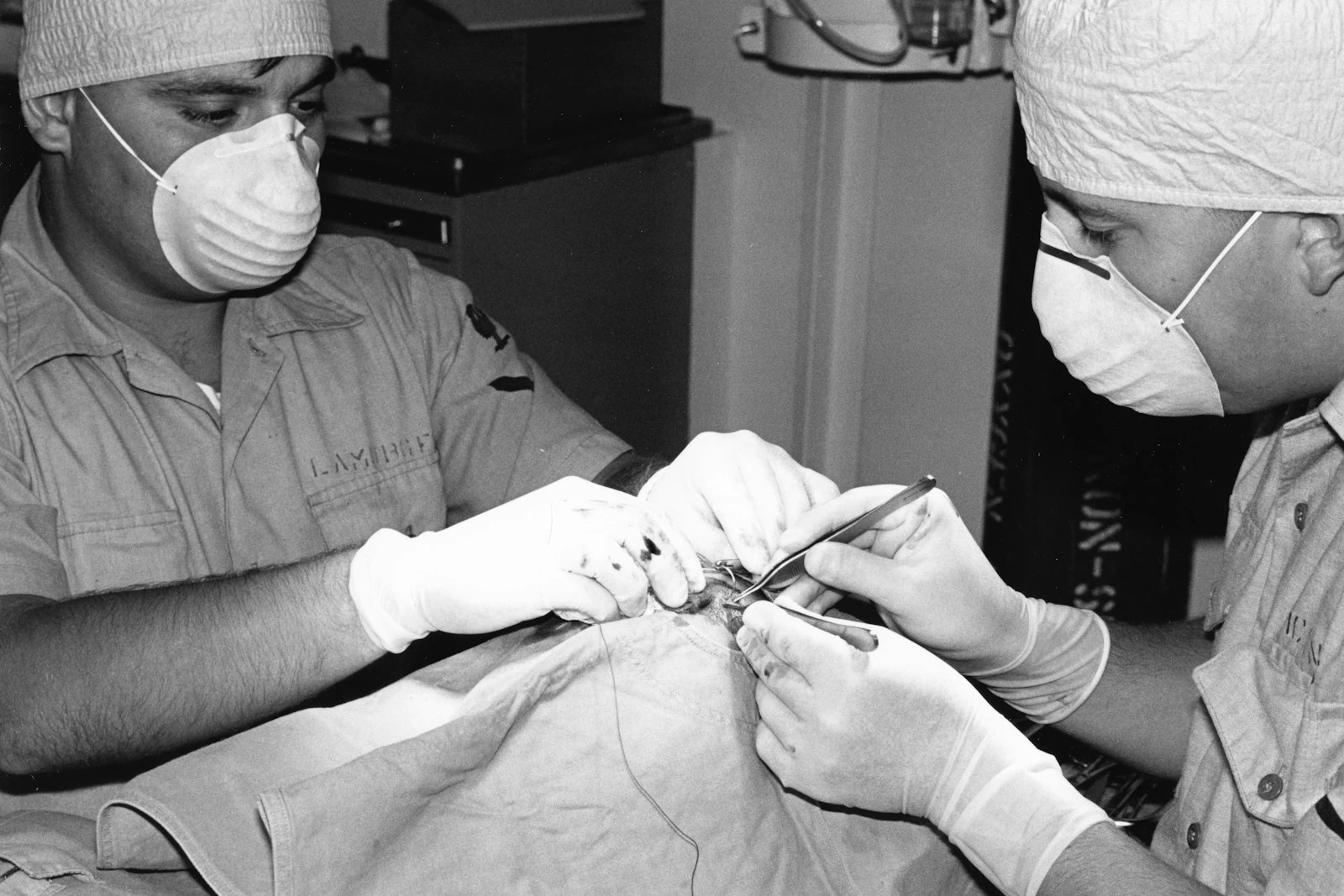
Soft tissue surgery and basic orthopedics at Vetero Grigorescu, with individualized anesthetic protocol and continuous monitoring of vital functions throughout the procedure.
Surgery is never an easy decision — neither for the owner, nor for us. At Vetero Grigorescu we approach every procedure as a staged plan: careful evaluation beforehand, anesthesia adapted to the patient, continuous monitoring on the table, and a clear analgesia and recovery protocol afterward. No two animals are identical, so the protocol isn't either — it's built around species, breed, age, weight, associated conditions, and the type of procedure.
Types of procedures we perform
We predominantly do soft tissue surgery and basic orthopedics, in a room equipped with an inhalation anesthesia machine and modern monitoring equipment.
- Spays and neuters in dogs and cats, including older patients, after evaluation
- Cutaneous and subcutaneous masses — excision with safety margins, layered closure, submission for histopathology
- Abdominal surgery — pyometra, splenectomy, enterotomy for foreign bodies, cystotomy
- Wound sutures, abscesses, aural hematomas
- C-sections, scheduled or emergency
- Basic orthopedics — closed reductions, some simple osteosyntheses
We do not perform major cardiovascular surgery, spinal neurosurgery, MRI-guided interventions, or laparoscopy. Cases that exceed our capabilities we stabilize and refer correctly to specialized clinics, with a complete file.
Pre-anesthetic exam
Before any general anesthesia we perform a complete clinical exam and recommend a complete blood count + biochemistry profile (urea, creatinine, ALT, glycemia, total proteins). For senior patients or those with chronic conditions, we add electrolytes, cardiac ultrasound, or chest X-rays as needed. We discuss fasting — typically 8–12 hours without food for a healthy adult, water until 2 hours before.
Anesthetic protocol
We use balanced anesthesia: injectable premedication for sedation and initial analgesia, induction with propofol or alfaxalone, intubation and maintenance with isoflurane or sevoflurane inhalation anesthesia in oxygen. This approach gives us a predictable recovery and fine control of depth. Intraoperative fluid therapy via venous catheter is standard.
Intraoperative monitoring
Throughout anesthesia we continuously monitor, with dedicated equipment and a nurse doing nothing else:
- Pulse oximetry (SpO₂) and capnography (EtCO₂)
- ECG and heart rate
- Non-invasive blood pressure
- Core temperature, with active warming blankets
Post-operative analgesia
Pain is managed proactively, not reactively. Analgesia begins before the incision and continues at home: NSAIDs of the meloxicam type for dogs and cats (in cats with adapted doses and durations), injectable opioids for more demanding procedures, local blocks where the anatomy allows. You go home with the medication clearly written — dose, time, duration — and with the signs to watch for.
Recovery at home
Most patients go home the same day, after they've fully woken up, walk steadily, and have drunk water. We explain it point by point: wound care, the Elizabethan collar or post-op suit, activity restriction (usually 7–14 days for spays/neuters), when you come back for follow-up and suture removal.
Frequently Asked Questions
Our Locations
Zorilor
Str. Ceahlau nr. 24
L-V: 10-20 / S-D: 10-15
Grigorescu
Str. Mendeleev nr. 4
L-V: 10-20 / S: 10-15
Other services
General Consultation
A general consultation is the starting point for any visit to Vetero — the vet assesses your animal's condition and works with you to set a clear plan, without complicated jargon.
Wellness & Preventive Care
Complete wellness exams and preventive screening at Vetero — so your pet lives longer, lives better, and we catch what isn't visible to the naked eye in time.
Advanced Diagnostics
Abdominal ultrasound, in-clinic lab tests and complementary investigations — quick answers and medical decisions based on hard data.