
ServicesEmergency Care 24/7
Emergency Care 24/7
The emergency line +40 772 171 794 is answered around the clock — a veterinarian, not a robot, guides you from the first minute.
A veterinary emergency gives no warning. It comes at 2 a.m., on Christmas Day, or ten minutes after you closed your eyes. That is exactly why the +40 772 171 794 line is active 24 hours a day, including weekends and holidays. A veterinarian answers — someone who listens, assesses and tells you exactly what to do in the next five minutes.
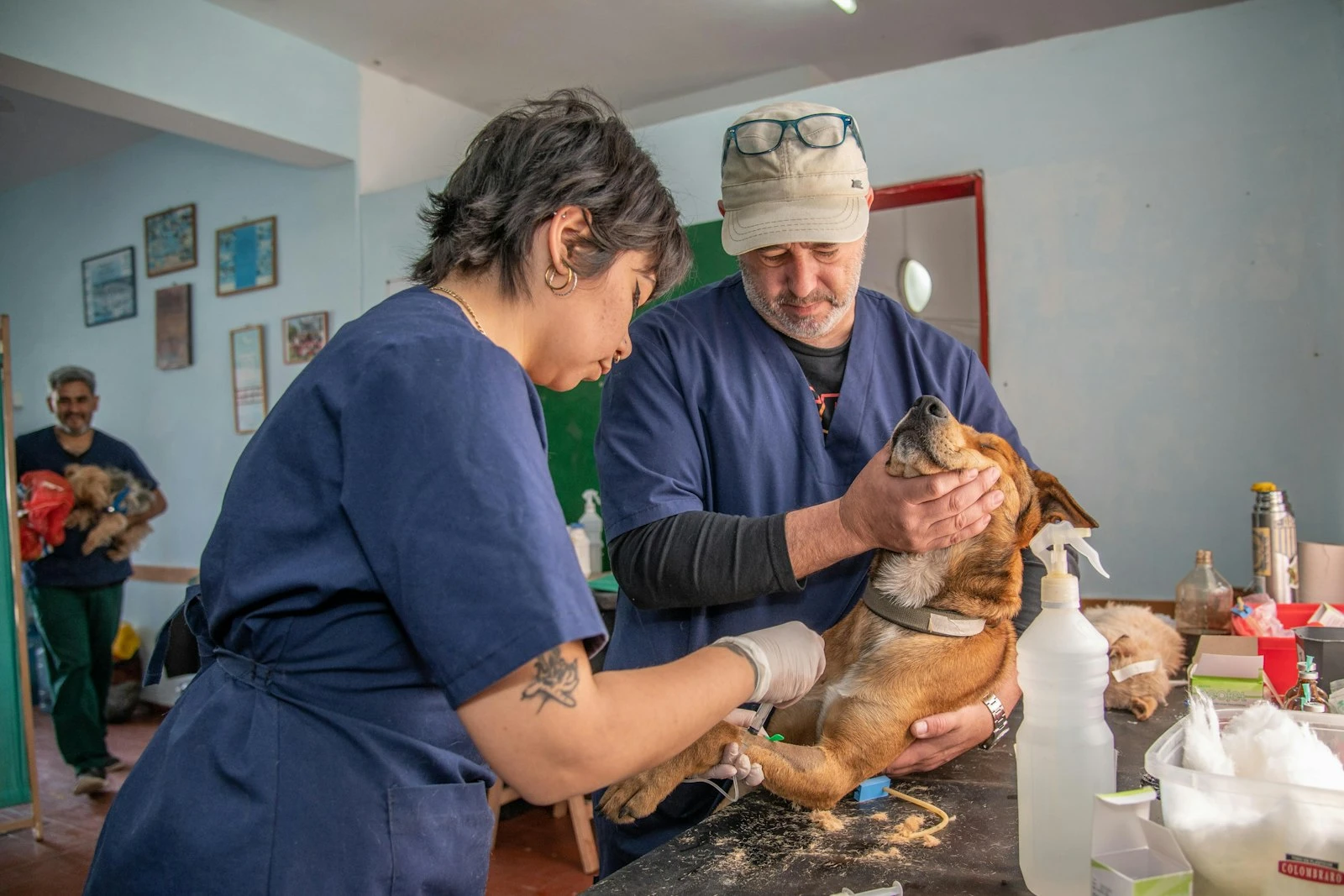
We are not a permanent ICU hospital. We are the clinic you bring your animal to when time matters: we stabilize, we intervene and we keep the patient under observation until the crisis passes or until a scheduled morning transfer takes over.
What counts as a real veterinary emergency
Not every problem that happens at night is an emergency. But these are:
- Difficult breathing — open mouth, bluish tongue, forced panting at rest
- Seizures or loss of consciousness
- Trauma — road accident, fall from height, severe bite
- A swollen, hard abdomen, especially in large dogs with restlessness and drooling (suspected GDV/bloat)
- Inability to urinate, particularly in male cats
- Bleeding that does not stop within a few minutes
- Suspected intoxication — chocolate, grapes, antifreeze, rodenticides, toxic plants
- Obstructed labor (dystocia) — over 30 minutes of contractions without result
- Vomiting or diarrhea with blood, accompanied by prostration
If you are unsure — call. After-hours triage over the phone is free and takes two minutes.
How an emergency call unfolds
The veterinarian asks you short, precise questions: species, age, what happened, since when, how the animal is breathing, whether it responds. Based on your answers we:
- give you first-aid instructions for the drive
- estimate the time until you arrive
- prepare the treatment room — IV fluids, oxygen, medication
- alert the team and, if needed, call in additional support
What to do before you arrive
- Stay calm — the animal feels your panic and grows agitated
- Do not give food, water or medication without instruction
- Do not induce vomiting in intoxications — some substances burn a second time on the way out
- For bleeding, press firmly with a clean cloth
- Transport the animal in a carrier, blanket or crate, not loose in your arms
- Drive carefully — a second accident does not help
What to bring with you
- The packaging of the ingested substance, if you suspect intoxication
- The list of medications the animal is taking
- The health booklet or any recent test results
- A companion if possible — the drive back can be hard
Stabilization in the clinic
On arrival we run an ABC assessment — airway, breathing, circulation — within the first 60 seconds. Depending on the case we intervene with:
- intravenous fluid therapy for shock and dehydration
- oxygen therapy in a cage or via mask
- injectable antiemetics and analgesics
- diuretics for pulmonary edema
- gastric decompression, urinary catheterization, emergency suturing
- rapid blood work — glucose, lactate, hematocrit
We explain on the spot what we see, what we are doing and what the possible scenarios are.
After the emergency — hospitalization or home
If the animal has stabilized, we can keep it under 24-hour observation with monitoring. If the case goes beyond what we can offer — neurosurgery, dialysis, complex transfusion, prolonged ICU — we help you organize a transfer to a partner hospital, with the complete chart in hand. We do not let you set off without a plan.
Frequently Asked Questions
Our Locations
Zorilor
Str. Ceahlau nr. 24
L-V: 10-20 / S-D: 10-15
Grigorescu
Str. Mendeleev nr. 4
L-V: 10-20 / S: 10-15
Other services
General Consultation
A general consultation is the starting point for any visit to Vetero — the vet assesses your animal's condition and works with you to set a clear plan, without complicated jargon.
Wellness & Preventive Care
Complete wellness exams and preventive screening at Vetero — so your pet lives longer, lives better, and we catch what isn't visible to the naked eye in time.
Advanced Diagnostics
Abdominal ultrasound, in-clinic lab tests and complementary investigations — quick answers and medical decisions based on hard data.