What does this vaccine protect against?
The feline trivalent covers the three serious viral diseases your cat may encounter, regardless of whether she leaves the house or not: feline viral rhinotracheitis (FHV — feline herpesvirus type 1), feline calicivirus (FCV), and feline panleukopenia (FPV). The first two cause respiratory infections with sneezing, eye and nasal discharge, mouth ulcers, fever, and loss of appetite. Panleukopenia is the most severe: a highly contagious virus that attacks the bone marrow and intestine, with a high mortality rate in kittens.
The second component, the rabies vaccine, protects against rabies — a fatal viral disease that can also be transmitted to humans. In cats, the virus spreads through the bite of an infected animal, and once symptoms appear there is no treatment. For this reason rabies vaccination is legally required for any cat that goes outdoors, travels, or comes into contact with other animals.
Receiving both vaccines in the same visit means a single trip, less stress, and complete protection for the coming year.
When is it given?
In kittens, the primary schedule starts at around 8-9 weeks with the first trivalent dose, followed by a booster 3-4 weeks later. The rabies vaccine is usually given at 12 weeks, once the immune system is mature enough. In adult cats coming in for the yearly booster, the two vaccines are administered together at a single visit.
Boosters are annual for cats with outdoor access, in multi-cat households, or travelling. For strictly indoor cats, the trivalent interval may be extended to 2-3 years based on recent international guidelines, but rabies stays annual if legally required or for a pet passport.
The cat must be healthy on the day of vaccination — no fever, no respiratory or digestive symptoms, and recently dewormed (within the last 2 weeks).
How is it administered?
Both vaccines are given subcutaneously, under the skin, in the shoulder area or on the thigh. The injection is brief and most cats tolerate it well — a chin scratch or a special treat works wonders as a distraction.
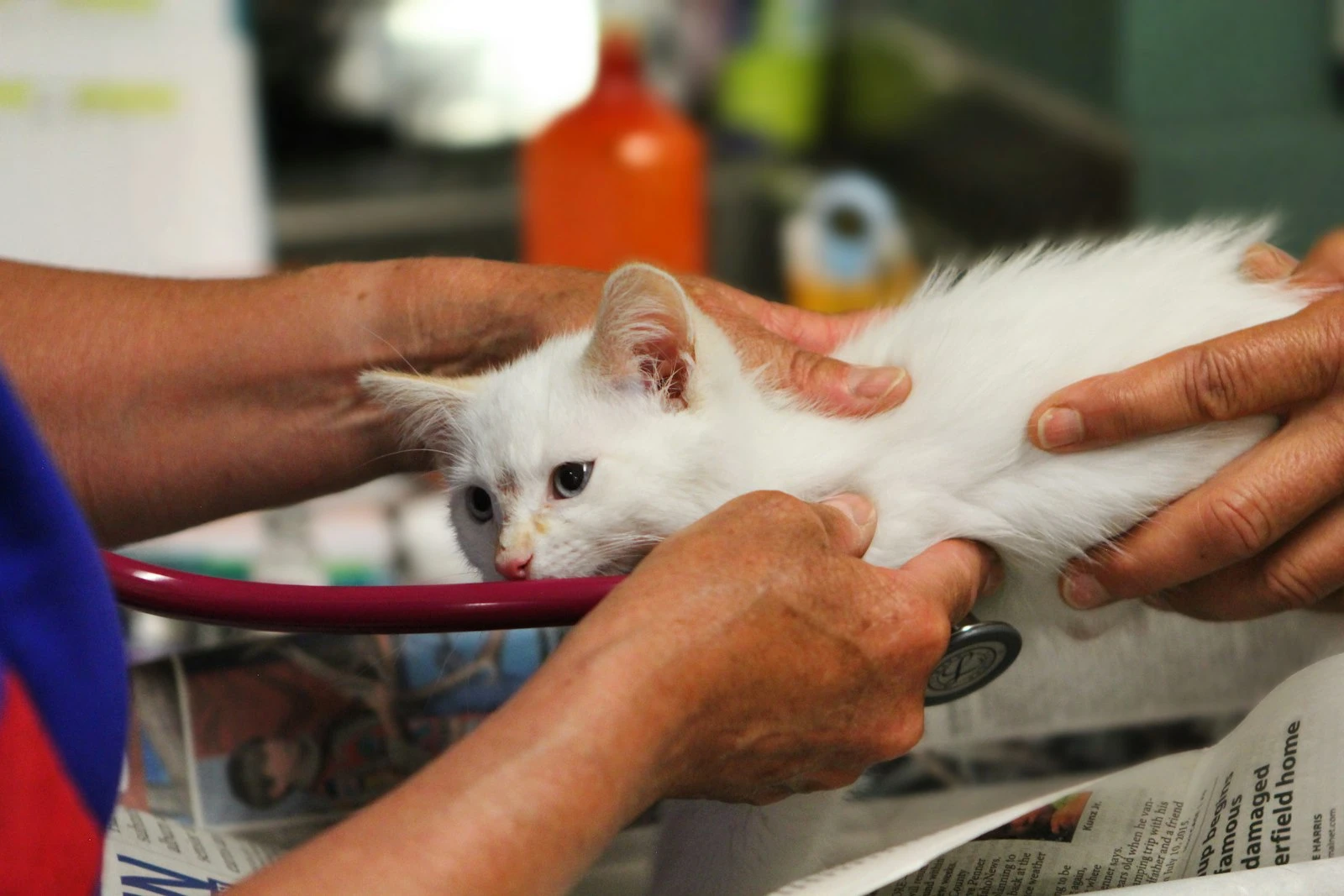
The veterinarian first performs a short clinical exam: temperature, listening to the heart, abdominal palpation, checking the mucous membranes. If everything is in order, the vaccine is given on the spot and recorded in the health booklet or passport, along with the product's serial and batch number.
At our clinic, the price for the Trivalent + Rabies combination is 230 lei, including the vaccination consultation.
Possible reactions
Most cats show no visible reaction to the vaccine. For a few hours, up to a day, they may be quieter, eat less, or sleep more — this is normal and passes on its own.
Locally, a mild tenderness or a small lump may appear at the injection site, disappearing within a few days. Very rarely, more noticeable allergic reactions may occur — itching, facial swelling, vomiting — requiring same-day contact with the veterinarian.
If you notice anything unusual in the first 24-48 hours — marked apathy, complete refusal to eat, breathing difficulties — please call us. Almost always it turns out to be nothing serious, but we would rather check.
Frequently asked questions
My cat never leaves the house. Does she still need the rabies vaccine? Legally, the rabies vaccine is not required for strictly indoor cats that don't travel. However, if your cat accidentally escapes outside, comes into contact with a bat that flew in through a window, or you are planning trips, the vaccine remains recommended.
How long does immunity last after the vaccine? Protection becomes effective within 7-14 days of administration and lasts about one year, which is why the booster is annual.
Can I vaccinate a pregnant or lactating cat? Not recommended, except in exceptional cases assessed by the veterinarian. Ideally, vaccination is done before pregnancy.
What if I am late with the booster? If a few months have passed beyond the ideal date, the vaccine can still be given without restarting the whole schedule. If more than 1-2 years have passed, the veterinarian may recommend repeating the primary schedule with a booster 3-4 weeks later.