What is a trichogram?
A trichogram is a non-invasive dermatological test in which the veterinarian gently plucks a few hairs from an affected area and examines them under the microscope. Under the microscope, a single hair can tell a surprising amount: whether the root is healthy or broken, whether fungal spores are present on the hair shaft (such as Microsporum canis, responsible for ringworm), whether there are parasite eggs at the base of the hair, or whether the shaft shows changes typical of certain hereditary or hormonal conditions.
At Vetero, a trichogram costs 25 lei and is performed directly in the consulting room, during the appointment. The result is available within minutes.
When is it needed?
The veterinarian recommends a trichogram in several situations where the coat or skin show signs of trouble:
- Bald patches (alopecia), often circular, suggestive of ringworm (dermatophytosis).
- Broken or short-cropped hair in a certain area — a sign that the animal is licking or scratching intensely.
- Suspicion of dermatophyte fungi, especially in young cats or animals coming from shelters.
- Changes in colour or structure of the hair in a localised area.
- Suspicion of hair-shaft parasites, such as certain ticks or Cheyletiella mites.
- Diagnosis of hereditary hair conditions, especially in breeds such as Great Dane, Doberman or German Shepherd.
A trichogram is often used together with a skin scraping and a Wood's lamp examination to round out the diagnosis.
What to expect
Before the procedure
No special preparation is needed. Ideally, the animal should not be washed during the previous week and should not have received topical treatments on the suspect area, so that the results are as accurate as possible.
During the procedure
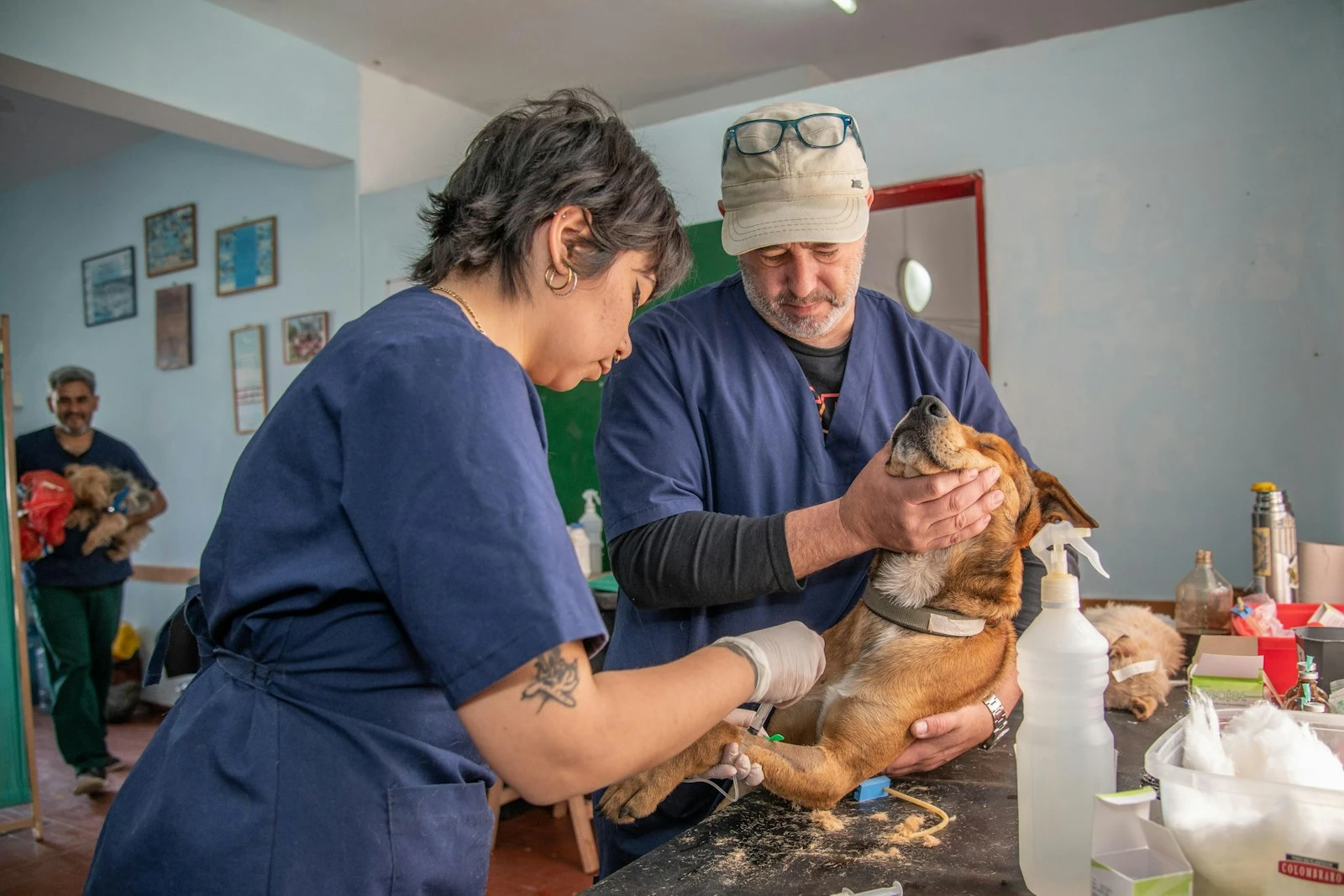
The veterinarian gently grasps a few hairs from the edge of the lesion with special forceps and plucks them in a single movement, in the direction of hair growth. The procedure is very quick and usually well tolerated — many animals do not even notice. The hairs are placed on a slide, treated with a clearing solution, covered with a coverslip and examined under the microscope.
After the procedure
There is no post-procedural discomfort. The animal can carry on with its day normally, with no restrictions. The result is explained to you straight away, and if fungi, parasites or other changes are identified, the veterinarian proposes a treatment plan.
Risks and considerations
The trichogram is one of the safest dermatological procedures. A few aspects are still worth keeping in mind:
- A negative result does not always rule out disease. For example, fungi may be present in an area smaller than the one examined; this is sometimes followed up with a DTM culture.
- Results are more accurate when hairs are taken from the edge of the lesion, not its centre.
- In animals with very short or fragile hair, plucking can be more difficult, but it is not painful.
Frequently asked questions
- Does it hurt? The sensation is similar to plucking a single hair on a human. Most animals do not react.
- How long does it take? The whole procedure, including microscopic examination, takes 5-10 minutes.
- Is sedation needed? No. A trichogram is done while the animal is awake, during the consultation.
- Can I bathe the animal afterwards? Yes, no problem. There are no grooming restrictions.
- Why is a fungal culture sometimes also needed? Because fungi are easier to identify by culture when they are present in small numbers; the trichogram is a quick first filter.