What is the fluorescein test?
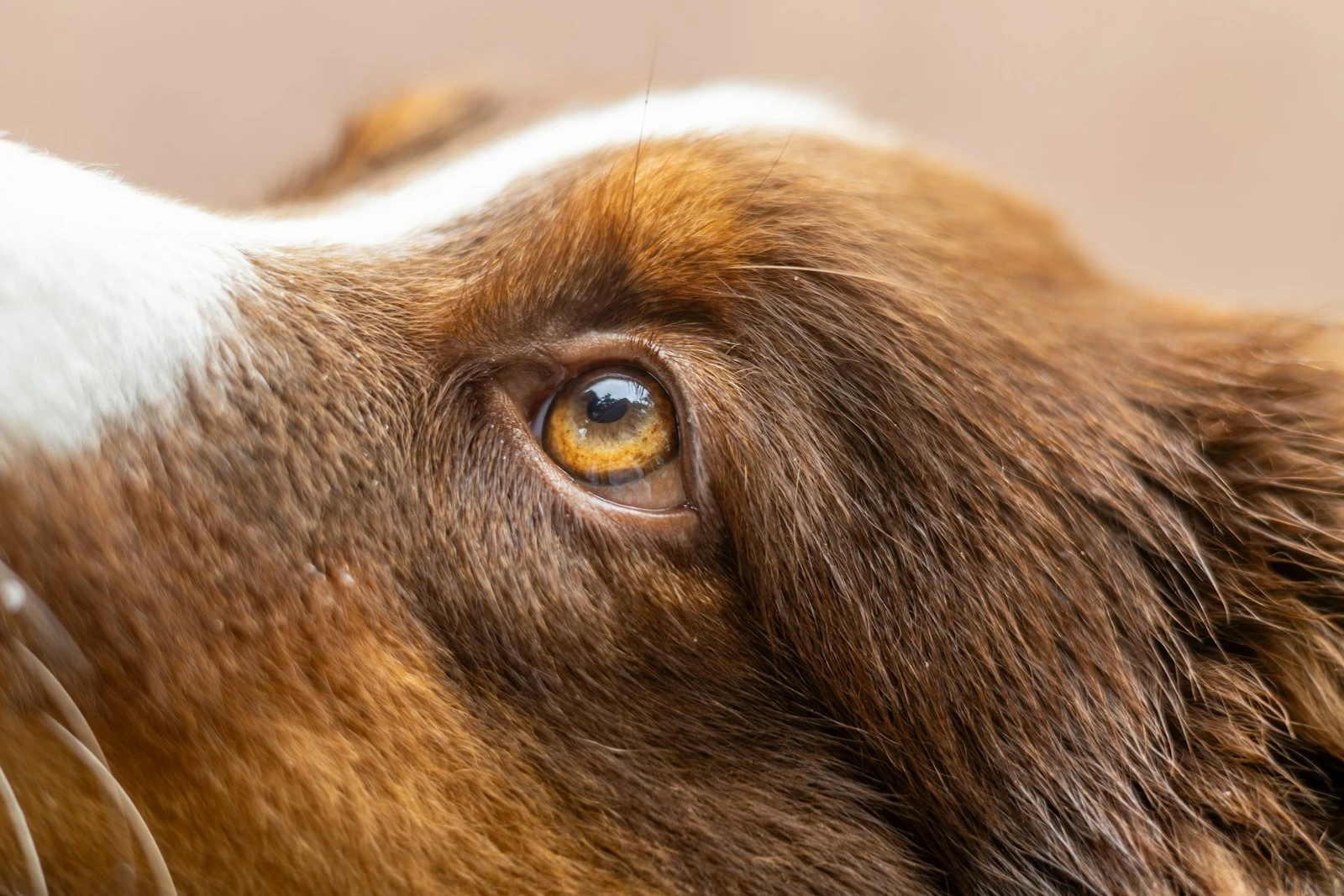
The fluorescein test is a very simple but extremely useful ophthalmological diagnostic procedure: we apply a small quantity of a special dye, called sodium fluorescein, to the surface of the pet's eye. The dye does not stain a healthy cornea, but adheres instantly to any area where the eye's protective outer layer (the corneal epithelium) is damaged. Under a special blue light, the damaged areas glow phosphorescent green — clearly visible even when the lesion is too small to see with the naked eye.
With this test we can detect superficial corneal scratches, deep corneal ulcers, perforations, chronic erosions, lesions caused by foreign bodies, and abnormalities of the tear film or of drainage through the nasolacrimal duct. It is one of the most used and most informative tests in veterinary ophthalmology.
When is it needed?
We perform the fluorescein test whenever a corneal lesion is suspected. The signs that should bring you in quickly are: excessive blinking or a closed eye (blepharospasm), heavy tearing, ocular discharge (clear, mucous or purulent), conjunctival redness, light sensitivity, rubbing the eye with a paw or against furniture, or a visible opaque membrane on the surface of the eye.
The test is also mandatory in animals that have suffered eye trauma (blows, scratches from another cat, contact with thorny plants), in breeds predisposed to corneal disease (bulldogs, pugs, Shih Tzu, Persians), and before any local ophthalmological treatment with corticosteroids — because an untreated ulcer can be masked and worsened by corticosteroids.
What to expect?
Before
No special preparation is needed. Your pet does not have to be fasting and does not need anaesthesia. Bring it in a carrier or on a lead, depending on the species. If you have noticed heavy discharge or your pet is rubbing its eye, try not to wash the eye beforehand with over-the-counter solutions — we would prefer to see it in its natural state.
During
The procedure takes 2–3 minutes. The veterinarian applies a small drop of fluorescein solution (or a thin impregnated paper strip) to the lower eyelid. The pet blinks, and the dye spreads across the entire surface of the cornea. We then rinse the eye with saline to remove the excess, and examine the cornea under blue light (Wood's lamp or biomicroscope). Any lesion appears as a bright green fluorescent area against the darker background of the eye.
After
Your pet can go home straight away. It is normal for a small yellow-green residue of dye to remain at the corner of the eye or on the fur for a few hours — there is no reason for concern and it disappears on its own. If the test is positive (a lesion is present), the veterinarian will explain treatment immediately: typically antibiotic eye drops, possibly a healing agent, and a period with an Elizabethan collar to prevent rubbing.
Risks and considerations
The fluorescein test is extremely safe — there are essentially no risks. The dye has been in use for decades and is well tolerated by all species. Very rarely, animals with a blocked nasolacrimal duct may sneeze out a green-tinted droplet of saliva — a sign that drainage is partially working, but nothing more.
What you should keep in mind is that a negative result (a cornea with no stained lesions) does not rule out all ophthalmological problems. Deep diseases — uveitis, glaucoma, retinal detachment — do not show up on this test and require further investigation. If signs persist despite a negative result, we will run additional tests.
Frequently asked questions
How soon do I get the result? Immediately. The test is interpreted in real time, on the spot. By the end of the consultation you will know exactly whether there is a lesion, how large it is, and what treatment is required.
Is it painful for the pet? No. Fluorescein produces no unpleasant sensation. In an animal that already has a painful eye, the moment of application may feel unpleasant because of contact with the sensitive area, but the test itself does not hurt.
How often should it be repeated? For ulcers in the process of healing, the test is repeated at 5–7 days to check that the lesion is closing. An ulcer that does not heal within 7–10 days or that grows in size requires re-evaluation and possibly a minor surgical procedure (debridement, conjunctival flap).