What does this vaccine protect against?
The trivalent vaccine is the cat's core vaccine and protects against three severe viral diseases, all highly contagious between cats:
- FCV — Feline calicivirus — produces oral ulcers, nasal and ocular discharge, transient lameness, and sometimes pneumonia. It is one of the major causes of chronic 'colds' in cats.
- FHV — Feline herpesvirus (viral rhinotracheitis) — causes sneezing, conjunctivitis, corneal ulcers and abundant discharge. Once infected, the cat remains a lifelong carrier and may relapse during periods of stress.
- FPV — Feline panleukopenia (feline distemper) — a severe viral disease, very similar to canine parvovirus: vomiting, haemorrhagic diarrhoea and a sharp drop in white blood cells. In kittens it is often fatal without intensive treatment.
Together, these three diseases account for the majority of viral illness in cats. The vaccine sharply reduces both the risk of illness and the severity of symptoms should infection still occur.
When is it given?
For a healthy kitten, the standard protocol starts at 8–9 weeks of age and continues with boosters every 3–4 weeks, up to 16 weeks of age. A booster follows at one year, and then the vaccine is given annually.
In adult cats with no prior vaccination or an unknown history, we recommend two doses 3–4 weeks apart, followed by annual boosters.
The trivalent vaccine is also required for any boarding facility, cat hotel, show, or travel abroad. Many breeders require a current vaccine before any move.
How is it administered?
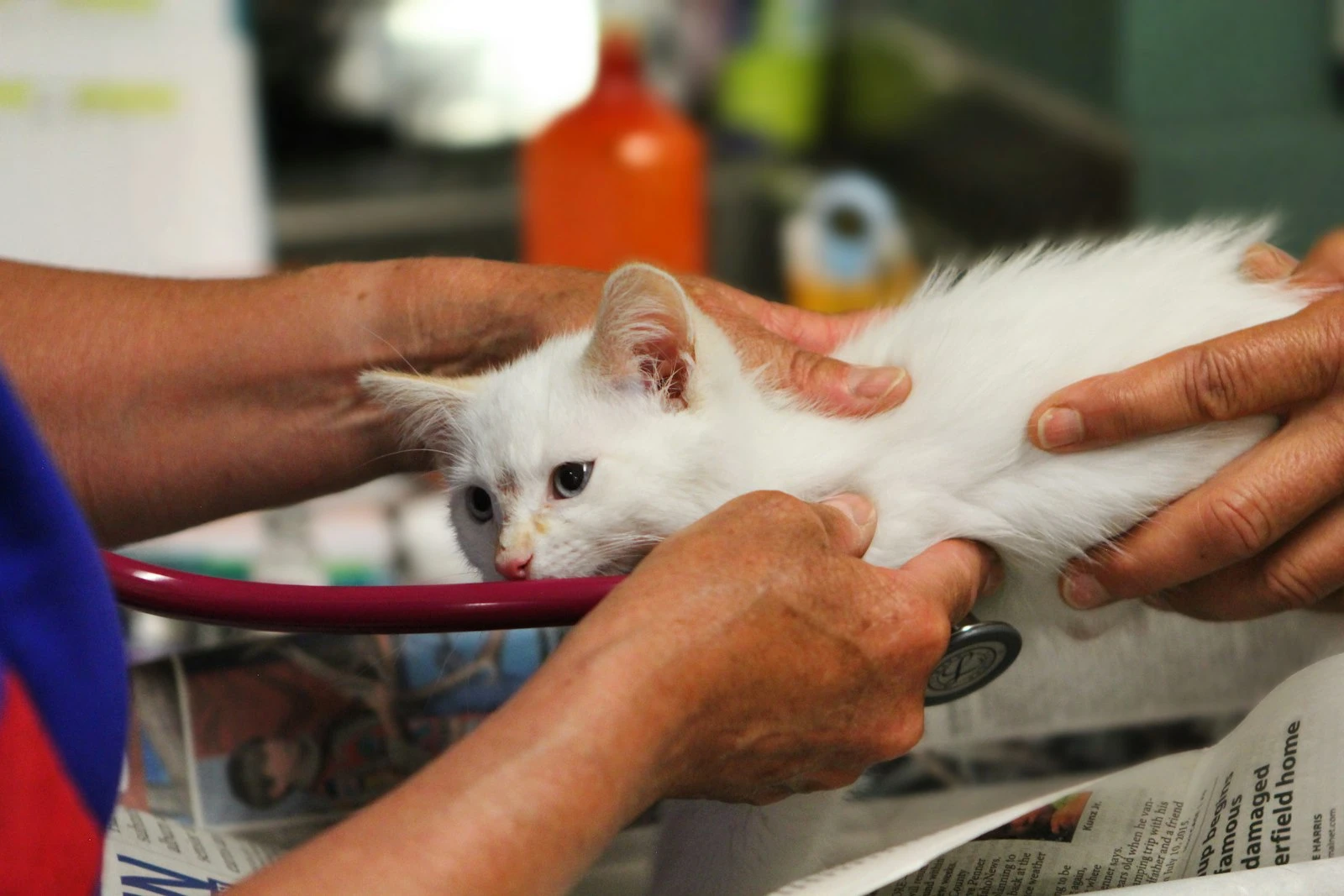
The vaccine is given as a subcutaneous injection, usually on the thigh or the side of the body. The procedure takes a few seconds. Beforehand, the veterinarian performs a brief clinical check: temperature, heart and lung auscultation, oral cavity and eye examination, and overall assessment.
A cat with sneezing, discharge, fever, diarrhoea or other signs of illness is not vaccinated that day — we wait for recovery. The kitten should be internally dewormed a few days in advance. Bring the health booklet or the passport; each dose is recorded with date, batch and the vet's signature.
Possible reactions
Most cats tolerate the vaccine without issue. In the first 24–48 hours you may notice:
- mild drowsiness and slightly reduced appetite
- a small swelling at the injection site, fading within a few days
- a mild, transient fever
- in some cats, isolated sneezing (especially with intranasal vaccines — we use the injectable form)
Serious allergic reactions are rare but possible: facial swelling, hives, repeated vomiting or breathing difficulty soon after vaccination. If so, contact us immediately. We recommend staying near the clinic for the first 30 minutes after vaccination.
Frequently asked questions
My cat is indoor-only — does she really need this vaccine? Yes. Viruses can be carried in on clothes, shoes or via contact with another animal. Panleukopenia in particular survives a long time in the environment.
Can a pregnant queen be vaccinated? We do not recommend vaccination during pregnancy. Ideally the queen is up to date before mating; this way she passes antibodies to the kittens through colostrum.
How long does immunity last? Protection lasts at least 12 months, which is why an annual booster is standard. Extended protocols exist for adult cats, which we discuss individually.
Does this vaccine also protect against feline leukaemia (FeLV) or feline AIDS (FIV)? No. There is a separate FeLV vaccine, recommended for cats that go outdoors or live with others of unknown status. FIV is prevented by reducing exposure (managing outdoor access, avoiding fights).
Does 150 lei include the consultation? Yes, the price covers the pre-vaccination consultation and the booklet entry.