What is a skin scraping?
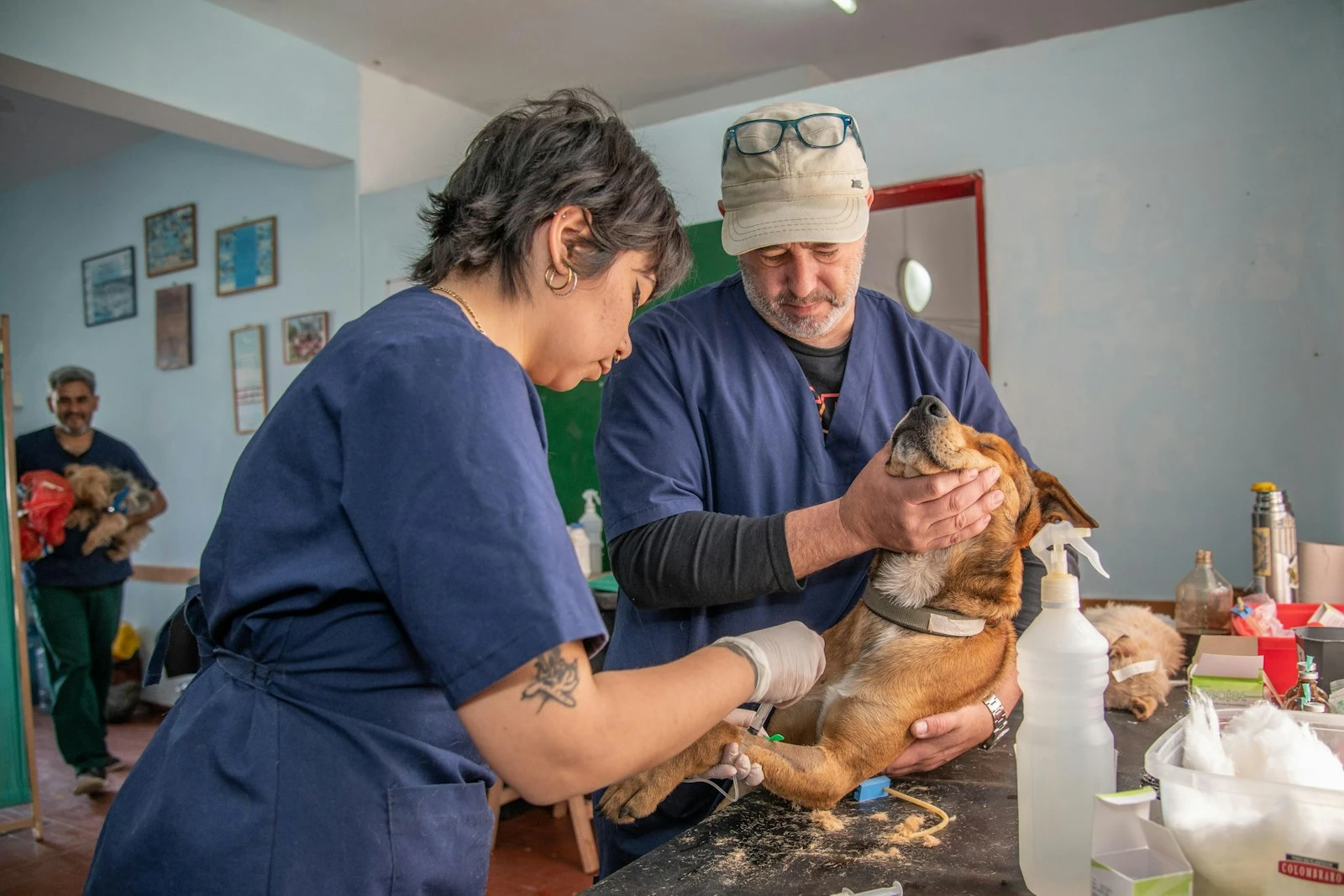
A skin scraping is one of the most widely used tests in veterinary dermatology. In practice, the veterinarian gently scrapes a very thin layer of skin, using a sterile blade or a blunt scalpel, from an affected area. The material collected is then placed on a glass slide, treated with a special solution and examined under the microscope for microscopic parasites such as the mites that cause scabies or demodicosis.
It is an inexpensive, fast and extremely useful investigation that usually gives an answer right there in the consulting room, without needing to send the sample to a laboratory. At Vetero, a skin scraping costs 25 lei and is performed during the consultation.
When is it needed?
The veterinarian recommends a skin scraping whenever the animal's skin shows signs that something is wrong. The most common situations are:
- Intense itching, especially on the elbows, belly, ears or around the eyes.
- Crusts, scales or scabs that do not clear up after the usual treatments.
- Bald patches (alopecia) with well-defined edges.
- Redness, thickened skin or a greyish discolouration typical of certain chronic parasitic conditions.
- Pustules, comedones (blackheads) or recurrent skin infections.
- Suspicion of scabies, especially in animals that have been in shelters or in contact with other affected animals.
In young dogs with bald patches on the face or paws, as well as in cats with intense itching, a skin scraping is almost always the first step in the diagnosis.
What to expect
Before the procedure
No special preparation is needed. You do not need to wash the animal beforehand, and you should avoid using skin treatments for at least 7 days before the appointment, as they may mask the presence of parasites. If you have recently applied a spot-on antiparasitic, let the veterinarian know.
During the procedure
The procedure takes only a few minutes. The veterinarian chooses the most suggestive area — usually at the edge of a lesion — and scrapes the skin until slight redness appears (deep scraping) or only superficially, depending on the parasite suspected. The animal feels something similar to a mild scratch; most dogs and cats tolerate the examination very well. The material collected is examined on the spot under the microscope.
After the procedure
The scraped area may remain slightly red for a few hours, but it heals without treatment. You can carry on normally with the animal — there are no restrictions on walking, eating or playing. The result is communicated the same day, and if parasites are identified, the veterinarian decides on the appropriate treatment immediately.
Risks and considerations
A skin scraping is a very safe test, and complications are extremely rare. There are, however, a few points to keep in mind:
- False negative result. Some parasites, such as Sarcoptes scabiei, are difficult to find, and a single negative scraping does not rule out infestation. For this reason, the examination may be repeated or combined with other tests.
- Small pinpoint bleeding with a deep scraping — this is normal and stops quickly.
- In very anxious animals or those with fragile skin, the veterinarian may choose a smaller area or a different type of sampling.
Frequently asked questions
- Does it hurt? The sensation is similar to a firm scratch. Most animals tolerate it well, without sedation.
- How long until I get the result? On the spot, in a few minutes, directly under the microscope.
- Does a single negative scraping mean there are no parasites? Not necessarily. With suspicion of scabies, the test may be repeated or supplemented with a trial treatment.
- Can I wash my dog beforehand? Better not, because the shampoo removes both the parasites and the cells useful for the examination.