What is a skin biopsy?
A skin biopsy is a procedure in which we take a small piece of skin — usually 4 to 8 millimetres — and send it to a veterinary histopathology laboratory for microscopic examination. The pathologist analyses the structure of the skin at cellular level and provides a precise diagnosis that, in many skin diseases, cannot be obtained by any other means.
Though the word "biopsy" may sound worrying, it is a routine procedure in veterinary dermatology, well tolerated and without major risks. For many skin diseases, it is the step that turns a "possible" diagnosis into a definitive one and allows targeted treatment to begin.
When is it needed?
The veterinary dermatologist may recommend a biopsy when:
- The skin lesions do not respond to standard treatments over several weeks.
- An autoimmune disease (pemphigus, cutaneous lupus) is suspected.
- Unusual growths, masses or nodules appear on the skin.
- There are chronic ulcers that fail to heal.
- A skin tumour, benign or malignant, is suspected.
- The "allergy" diagnosis has been exhausted and itching persists unexplained.
- There are pigment or structural changes of the skin with no clear cause.
In some cases, biopsies are taken from several sites in the same session, to capture different stages of the lesion.
What to expect
Before the procedure
We explain why the biopsy is needed, what we expect to find and how long the result takes. Your pet should arrive fasting on the morning of the procedure if sedation is planned. We will ask about recent treatments — sometimes we ask you to stop them a few days in advance, so the result is as accurate as possible.
During the procedure
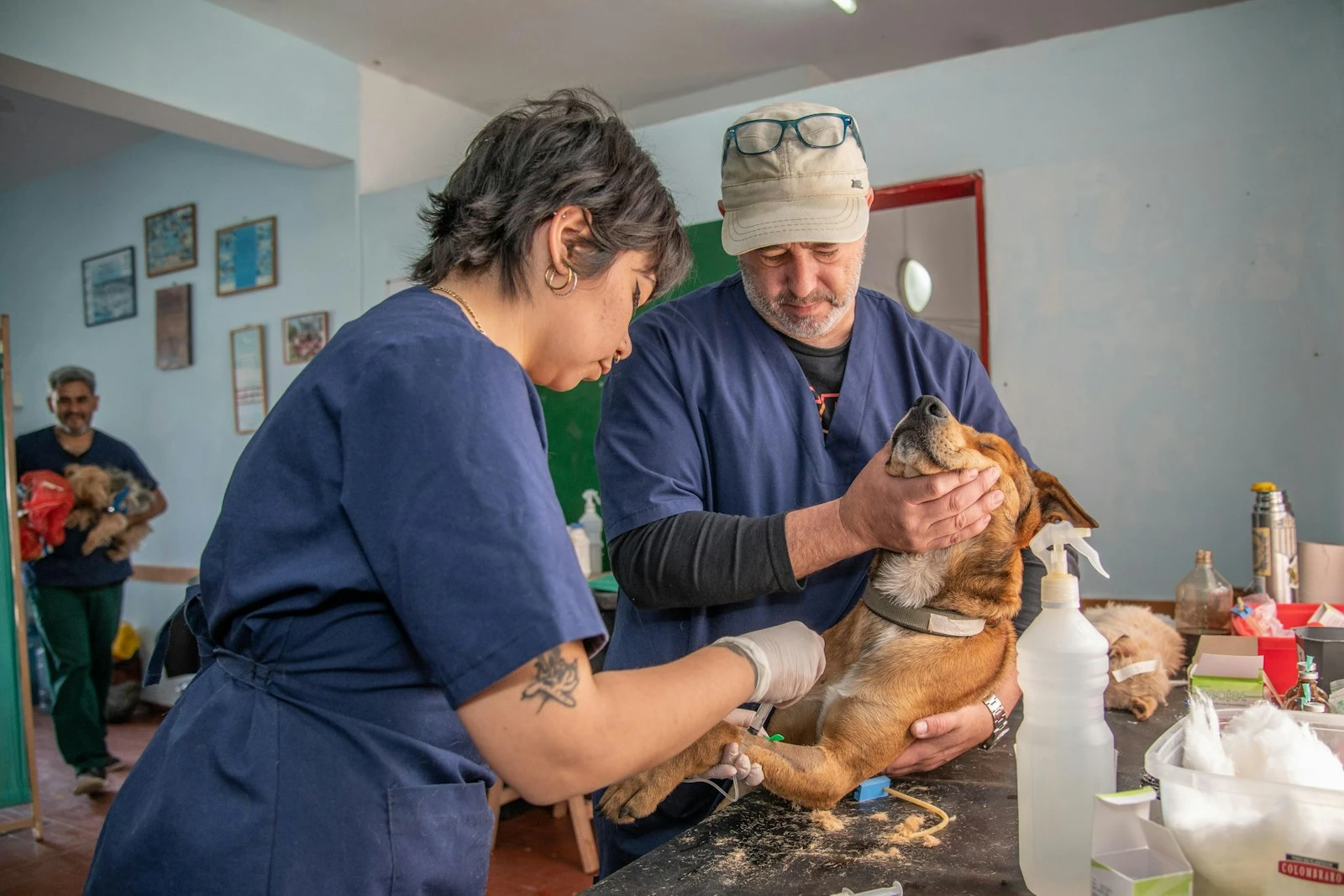
The procedure lasts 15 to 30 minutes. For small, accessible lesions, local anaesthesia by a subcutaneous injection is enough. For multiple, sensitive or hard-to-reach lesions (face, ears, paw pads), we prefer light sedation. Using a "punch" device — a small tube with a sharp edge — we collect a cylindrical sample of skin that includes all layers. The biopsy site is closed with 1 or 2 fine sutures.
After the procedure
Your pet goes home the same day, with an Elizabethan collar for a few days to prevent licking of the wound. You may give local antibiotics or mild anti-inflammatories. Sutures are removed after 10 to 14 days at a short follow-up visit. The histopathology report is available in 5 to 10 working days; we contact you as soon as we receive it, to discuss the conclusions and the treatment plan.
Risks and considerations
Skin biopsy is one of the safest diagnostic procedures, but there are a few points to keep in mind:
- Minor bleeding at the sampling site, stopping on its own within a few minutes.
- A low risk of infection at the wound if the animal licks the area — which is why the collar is mandatory.
- A small scar, visible for a short time, that becomes covered by fur within a few weeks.
- An inconclusive result, in rare cases when the biopsied lesion is not representative; sometimes the biopsy needs to be repeated.
- The risks of sedation are minimal in healthy animals, and we screen for them beforehand with blood tests and a clinical exam.
On the other hand, refusing a biopsy in a complex case often means repeated treatments without a clear response — which, over time, costs more, lasts longer, and frustrates both the patient and the family.
Frequently asked questions
- Is it painful? No — local anaesthesia or light sedation makes it comfortable. Postoperative discomfort is minimal and easily controlled.
- How long does the wound take to heal? Healing is complete within 10 to 14 days.
- Do I need to clip the fur? Yes, around the sampling site — we do this in the clinic, gently.
- Is the result reliable? Histopathology is the gold standard in dermatology. In very rare cases, a second sample is needed for a definitive diagnosis.
- How much does it cost? The procedure fee is 300-600 lei, depending on the number of samples and whether sedation is needed. The laboratory histopathology is billed separately.