What does this vaccine protect against?
The intranasal vaccine protects dogs against kennel cough (medically known as canine infectious respiratory disease complex), a highly contagious respiratory illness caused mainly by the bacterium Bordetella bronchiseptica, often together with the canine parainfluenza virus. Many intranasal vaccines contain the Bordetella + parainfluenza combination, sometimes also adenovirus, giving broader protection on the main upper-airway routes.
The disease spreads through coughing, sneezing, shared bowls and toys, direct contact with other dogs. Classic signs are a dry, honking cough that sounds like a goose, triggered by movement or excitement, nasal discharge, sometimes a mild fever. It appears in boarding kennels, shelters, dog parks, shows and training schools.
When is it given?
The intranasal vaccine can be given from 3 weeks of age and then annually as a booster. It has an important advantage: it produces local immunity on the nasal mucosa within 72 hours, making it a fitting option when fast protection is needed before boarding or a planned exposure.
We particularly recommend it for:
- Dogs going to boarding kennels or training schools.
- Puppies and adults that visit parks or spaces with many other dogs.
- Show, contest and canine-sport dogs.
- Dogs scheduled for surgery or hospitalisation.
Many boarding facilities require this vaccine at check-in, given at least 7-10 days before the stay.
How is it administered?
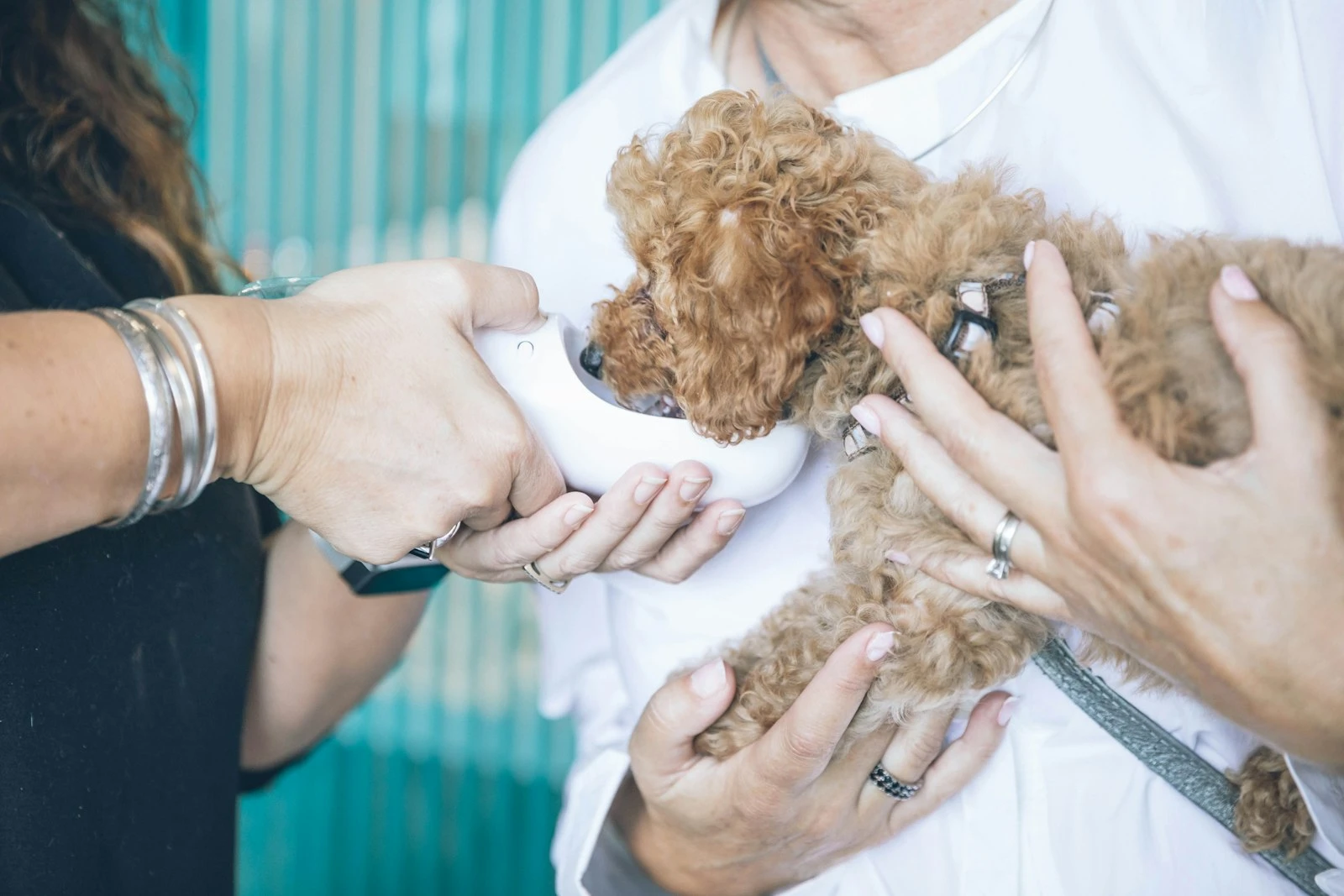
The intranasal version is given as nose drops, a few drops in each nostril. The procedure takes only a few seconds and is not painful, but many dogs find the sensation of liquid in the nose mildly startling. We work calmly and patiently, hold the head firmly but gently, and administer the dose quickly. Some dogs sneeze immediately after — this is completely normal and does not compromise the vaccine.
Because immunity is built directly on the mucous membrane where the pathogen enters, the intranasal vaccine is very effective at preventing infection and transmission.
Possible reactions
The intranasal vaccine is well tolerated. Reactions are usually mild and short-lived:
- Sneezing immediately after administration, for a few minutes.
- A mild, watery nasal discharge for 1-3 days.
- Occasional mild cough for 1-3 days.
- Possibly some sensitivity when the muzzle is stroked.
Generalised allergic reactions are very rare. Call us if you notice laboured breathing, facial swelling, persistent vomiting or marked apathy.
Frequently asked questions
My dog will not stay still for nose drops. Is there an alternative? Yes, the oral version (a drop in the cheek pouch) is a gentle alternative, very well tolerated, that we can choose together.
How long before boarding should the vaccine be given? At least 7-10 days before. The intranasal vaccine acts quickly, but optimal protection builds over about a week.
Why the intranasal form? Because it produces local immunity directly on the nasal mucosa, exactly where the bacterium and virus enter. Many veterinarians consider it among the most effective forms against kennel cough.