What is intradermal testing?
Intradermal testing is considered the gold-standard method in veterinary medicine for identifying environmental allergens — pollens, house dust mites, moulds, animal danders — in patients with atopic dermatitis. It involves injecting very small amounts of a standardised panel of allergens into the superficial layers of the skin, followed by observation of the local reaction (wheal, redness, swelling) at each injection site.
The test is performed on a shaved area on the side of the chest, and positive reactions usually appear within 15-30 minutes. Unlike serological testing, intradermal testing directly measures the reactivity of the animal's skin, which makes it closer to the actual mechanism of the disease.
When is it needed?
Intradermal testing is recommended when the veterinarian has already established, by exclusion, that the condition is atopic dermatitis — that is, other possible causes of itching (parasites, bacterial or fungal infections, food allergies) have been ruled out. The test becomes useful when allergen-specific immunotherapy (the desensitising vaccine) is being considered, for which the responsible allergens must be precisely identified.
It is also indicated in animals with chronic itching that does not respond to standard symptomatic treatments or whose symptoms return immediately after medication is stopped.
What to expect
Before
The veterinarian will ask you to stop, several weeks in advance, certain medications that can interfere with the result: antihistamines, corticosteroids and some itch-control treatments. The exact washout period depends on the drug and you will receive it in writing. On the day of the test, the animal comes in fasted from the morning, because the procedure is done under light sedation.
During
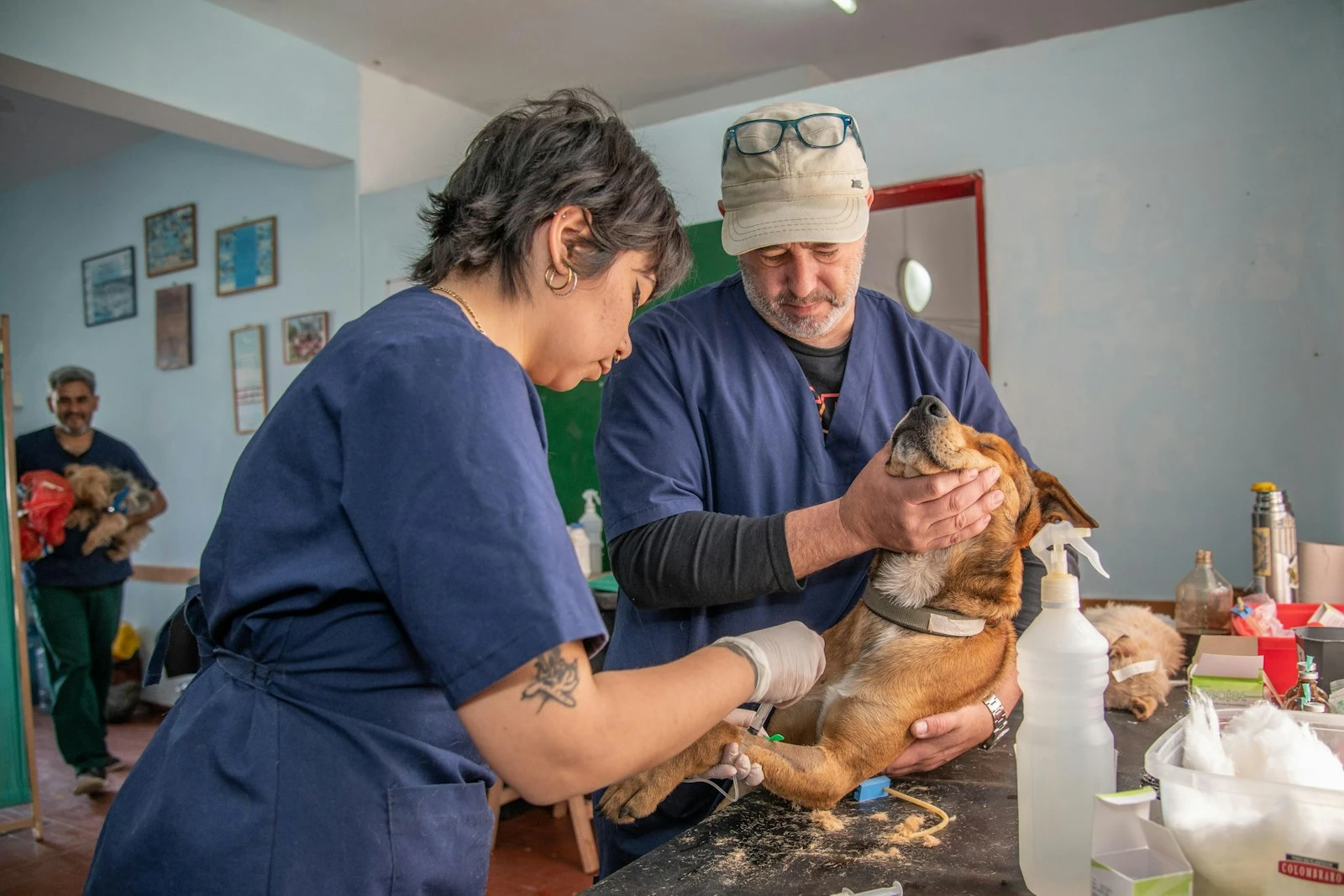
After sedation, an area on the side of the chest is shaved and the injection sites are marked. 0.05-0.1 ml of each allergen is injected intradermally, alongside a positive control (histamine) and a negative one (saline). Reading is done at 15-30 minutes, comparing the diameter of the wheals with the controls.
After
The animal recovers from sedation within 1-2 hours, and the shaved area may remain slightly red for a day. Results are interpreted on the spot and discussed with you, together with the treatment options that follow.
Risks and considerations
Intradermal testing is a safe procedure, but sedation carries the general risks of light anaesthesia, which is why a prior assessment of the animal's health is performed. In rare cases a systemic allergic reaction can occur, but the team is prepared to intervene immediately.
False-negative results may occur if interfering medication was not stopped for long enough, while false positives are possible in animals with very reactive skin. For this reason, interpretation is always done in the clinical context of the patient.
Frequently asked questions
How long does the procedure take? About 60-90 minutes, including sedation, testing and recovery.
How many allergens are tested? The standard panel includes 40-60 allergens relevant to our geographical area.
What happens once we have the results? Based on the identified allergens, a personalised desensitising vaccine can be prepared, given long-term (1-3 years), which reduces the organism's sensitivity to those allergens.
The price is between 800-1200 lei, depending on the number of allergens tested and the complexity of the case.