What is a haematology panel?
A haematology panel, also known as a complete blood count (CBC), is the basic blood test used to evaluate the three cell lines: red blood cells (erythrocytes), white blood cells (leukocytes) and platelets. The laboratory analyser measures the number, size and concentration of these cells, providing a comprehensive picture of the state of the blood.
It is a quick, affordable and highly informative investigation, which is why it is part of almost every diagnostic protocol as well as of routine evaluations. It is often combined with a biochemistry panel for a complete view of internal health.
When is it needed?
A CBC is recommended in many situations: at the first visit of a puppy or kitten, as a yearly preventive evaluation in adult animals, before any surgical procedure with anaesthesia, in animals showing non-specific symptoms (tiredness, lack of appetite, fever), and to monitor a chronic disease or an ongoing treatment.
In senior animals it becomes a baseline investigation at six-monthly check-ups, for the early detection of anaemia, infection or changes suggestive of more serious conditions.
What to expect
Before
In general, no special preparation is needed. For patients in whom the test is combined with biochemistry, an 8-12 hour fast is recommended. Water remains available. The animal comes to the clinic calmly, possibly accompanied by a familiar toy or blanket.
During
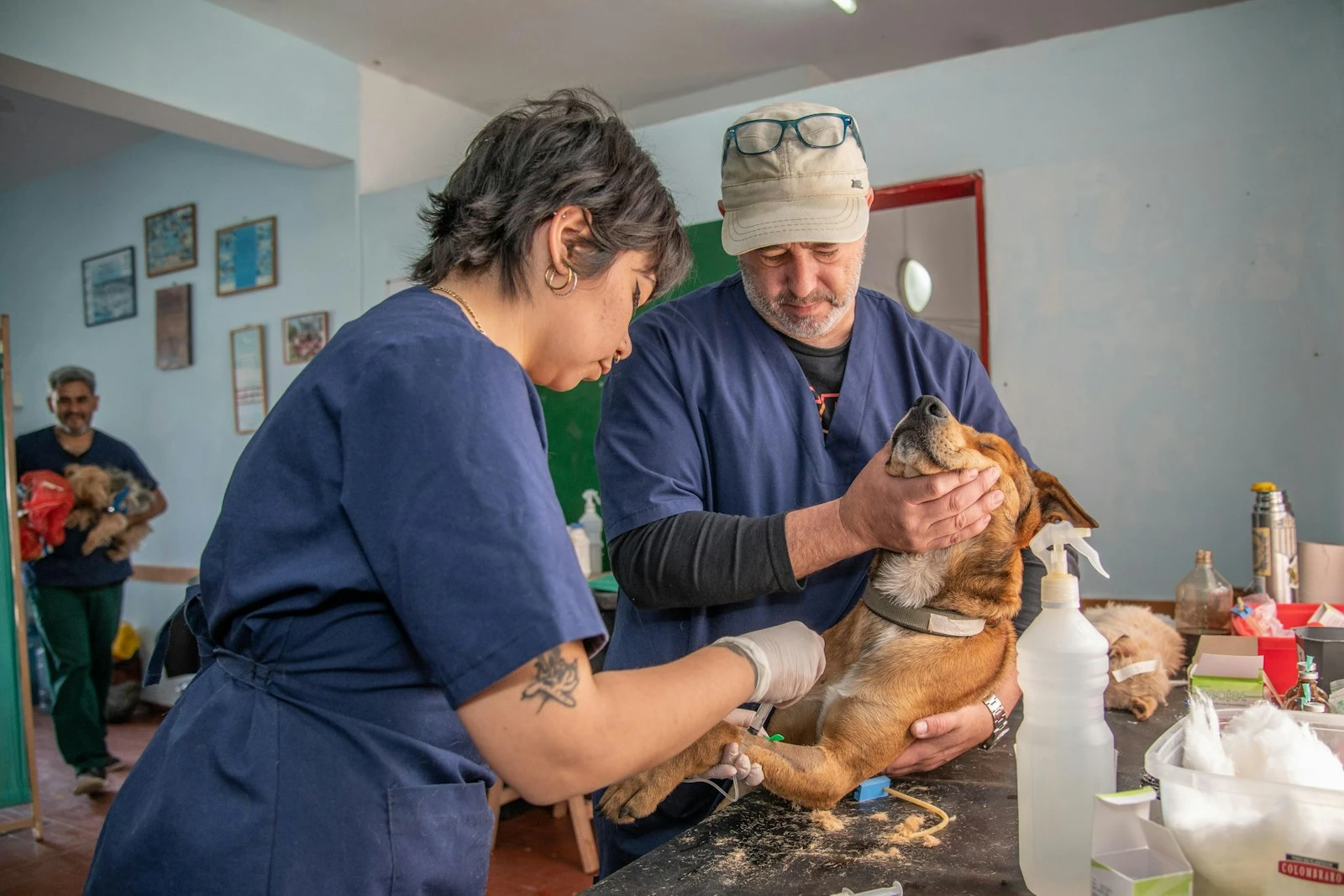
A small blood sample (1-2 ml) is drawn from a peripheral vein — usually the cephalic vein (on the front limb) or the saphenous vein (on the hind limb). The procedure takes a few minutes, is very well tolerated, and does not require sedation. An assistant's hand gently supports the animal while the veterinarian performs the puncture.
After
The animal returns to its activities immediately. The sampling site is held under light pressure for a few seconds to avoid a small bruise. Results are usually available on the same day, often within a few hours, depending on the laboratory's workload. The veterinarian interprets them and explains them to you in plain language, indicating which values are within range and what any deviations mean.
Risks and considerations
The risks are minimal. The most common effect is a small bruise at the puncture site, which fades in 1-2 days. Very anxious animals may need a break to settle before sampling; rarely, light sedation is used for very agitated patients.
Results must always be interpreted in clinical context. A single value slightly outside the reference range does not necessarily mean disease, just as values within range do not rule out every condition. For this reason the veterinarian correlates results with the clinical examination and the animal's history.
Frequently asked questions
How long does the sampling take? The puncture itself takes 1-2 minutes. The whole visit, including the discussion with the veterinarian, takes 15-20 minutes.
When do I get the results? Usually on the same day. For specialised tests sent to an external laboratory, within 24-48 hours.
How often should it be done in a healthy animal? Once a year in young adults, every six months in seniors (over 7 years in dogs, over 10 years in cats) or in animals with chronic conditions.
The haematology panel is 120 lei.