What are entropion and ectropion?
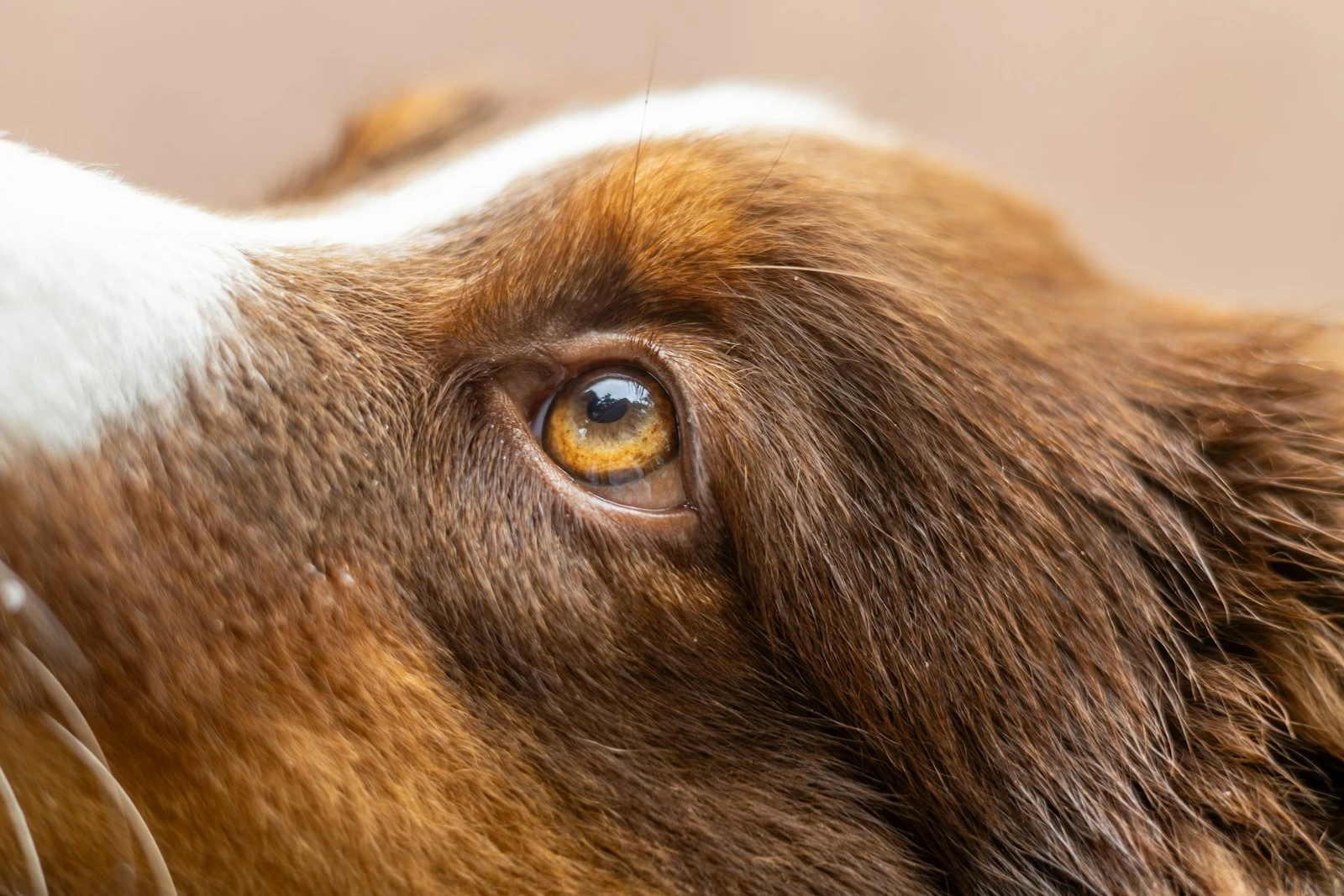
The eyelids protect the eye and spread tears across the cornea. When the eyelid no longer sits in the correct position, two distinct problems arise: entropion, where the edge of the lid rolls inward and the hair touches the cornea directly, and ectropion, where the lid sags outward and exposes the conjunctiva.
Both conditions cause chronic discomfort and can lead to repeated inflammation, corneal ulcers and, in severe cases, loss of sight. They are common in dogs with loose facial skin (Shar-Pei, Chow-Chow, Bulldog, Cocker Spaniel, Saint Bernard), and in some flat-faced cats. They may be congenital, appearing in young animals, or acquired, following a scar, paralysis or ageing.
When is it needed?
Surgery becomes necessary when:
- Your pet blinks excessively, has watery eyes or noticeable discharge.
- You see persistent redness of the conjunctiva or a cloudy cornea.
- There are repeated bouts of conjunctivitis that do not respond to topical treatment.
- A corneal ulcer has been diagnosed during an eye exam.
- The lower lid clearly sags or has lost contact with the eyeball.
In puppies of predisposed breeds, we recommend correction as early as possible, before chronic irritation causes permanent damage. Medical treatment (artificial tears, topical antibiotics) can ease symptoms but does not address the cause — only surgery repositions the eyelid.
What to expect
Before the procedure
We assess your pet's general health with blood tests and a full eye exam, including tear-production testing (Schirmer test), fluorescein staining of the cornea to detect ulcers, and intraocular pressure measurement. Based on these results, we plan the exact incision. Your pet should arrive fasting on the morning of surgery, following our instructions.
During the procedure
The operation takes place under general anaesthesia and lasts between 45 and 90 minutes, depending on the complexity. For entropion, we remove a small crescent-shaped piece of skin from the lid so that the edge rolls back into its normal position. For ectropion, we shorten and tighten the lid to restore its contact with the eyeball. Sutures are very fine and placed carefully to avoid further irritation.
After the procedure
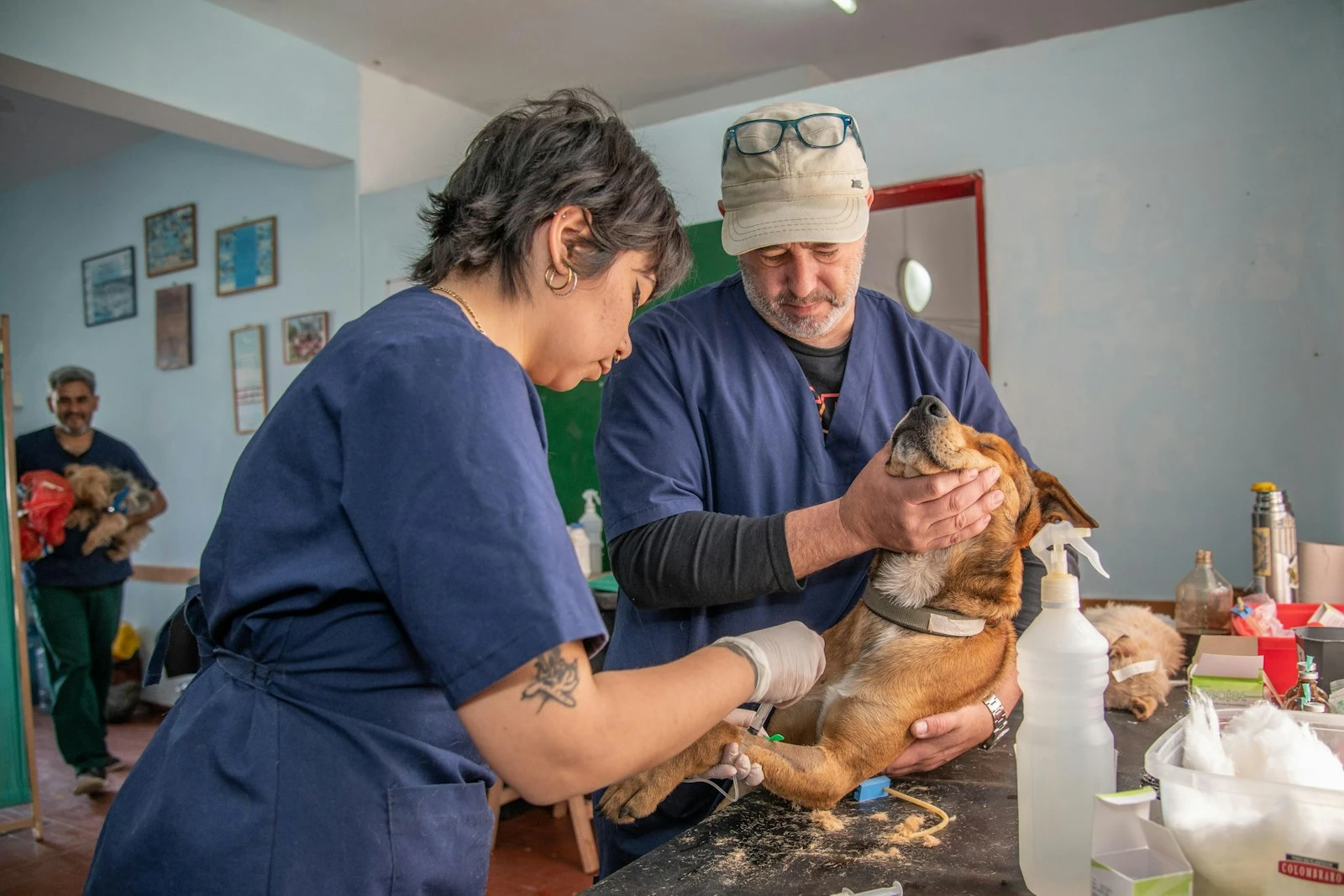
Your pet wakes up within a few hours and goes home the same day, with an Elizabethan collar that must stay on for 10–14 days. You will give eye drops and, in some cases, oral anti-inflammatories. Sutures are removed at a follow-up visit, after about two weeks. Discomfort is minimal — most animals eat normally on the evening of surgery.
Risks and considerations
Eyelid surgery is safe in experienced hands, but a few points are worth knowing:
- Under- or over-correction, especially in young, still-growing animals; a small later adjustment is sometimes needed.
- Local inflammation in the first few days, controlled with the prescribed medication.
- Risk of wound infection if the collar is removed or the animal scratches — this is why we insist on following the instructions.
- Recurrence is rare when the technique is chosen correctly.
Delaying surgery carries its own risks: a chronic corneal ulcer can progress to perforation and loss of vision.
Frequently asked questions
- At what age can it be done? Usually after 6 months, when the eyelid has finished developing; sometimes earlier, if irritation is severe.
- Is one eye operated or both? If both lids are affected, we correct them in the same surgery, to reduce the number of anaesthetics.
- Will there be a visible scar? Fine sutures and careful placement of the incision leave a discreet mark, quickly covered by the fur.
- How much does surgery cost? The fee is 400-800 lei, depending on complexity and the number of lids involved. Anaesthesia and postoperative checks are billed separately.