What is allergen serology?
Allergen serology is a blood test that measures the level of specific antibodies (IgE) against a broad range of environmental and, in some panels, food allergens. Unlike intradermal testing, which directly tests the animal's skin, the serological test is done from a single blood sample, without shaving and without sedation.
The sample is sent to a specialised laboratory, and the results come back in 7-14 days as a list of the allergens to which the animal reacts, graded from weakly to strongly positive. Based on these, a personalised desensitising vaccine can be designed, just as with intradermal testing.
When is it needed?
Serological testing is recommended for animals with confirmed atopic dermatitis in whom intradermal testing cannot be performed — either because the skin is too inflamed, or because the animal cannot be safely sedated, or because they are on medications that cannot be discontinued. It is also a practical option for owners who prefer a less invasive analysis.
Some serological panels also include food allergens, which can help with an initial screening when food allergy is suspected, although the gold standard remains the elimination diet.
What to expect
Before
No special preparation is required. The animal can eat normally and continue its usual medication, unless the veterinarian advises otherwise. Unlike skin testing, antihistamines and corticosteroids do not influence serological results to the same extent.
During
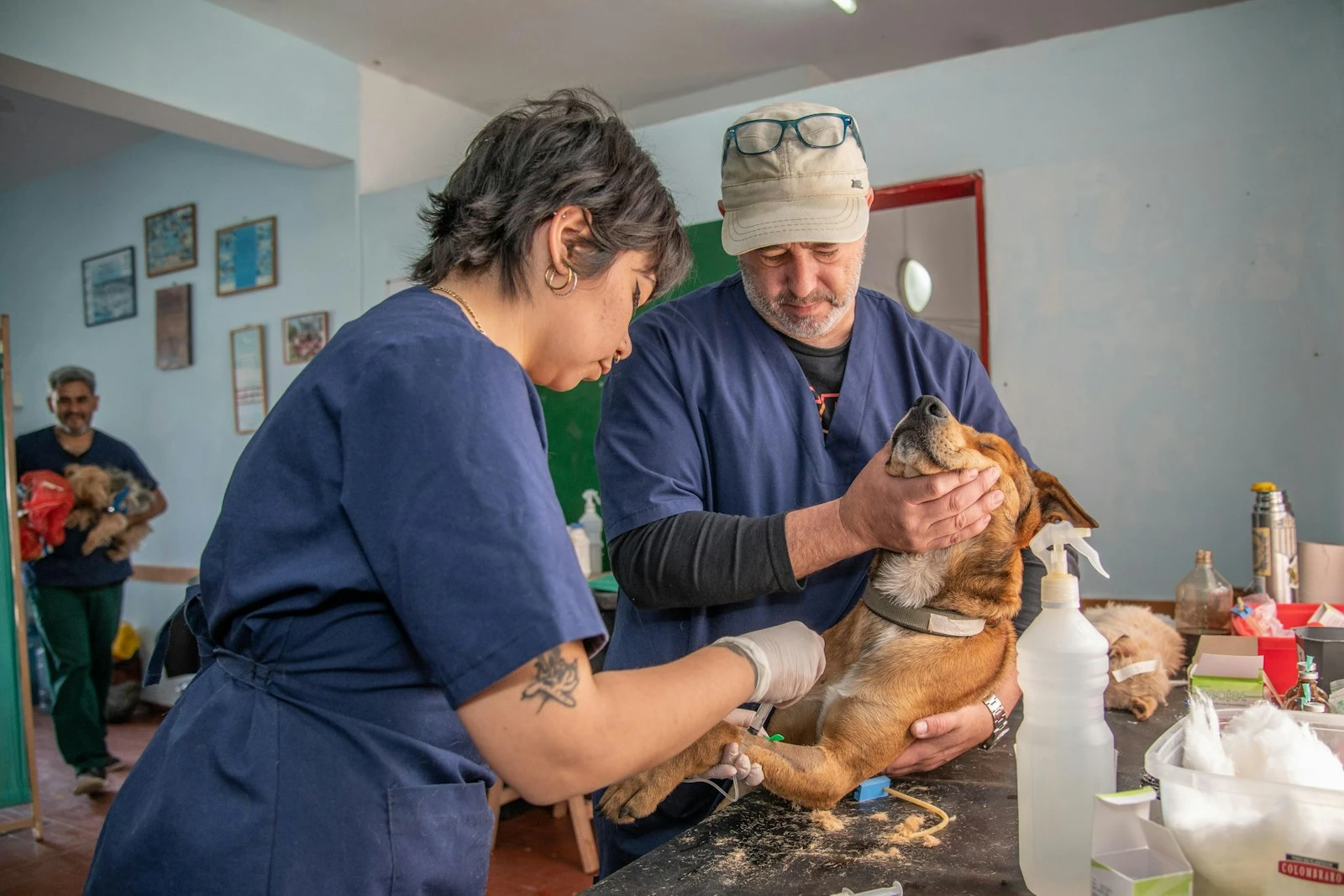
A blood sample (3-5 ml) is drawn from the cephalic or jugular vein, exactly as for routine tests. The procedure takes a few minutes and is generally very well tolerated. No sedation is required.
After
The animal returns to normal activity immediately. The sampling site may show slight redness, which resolves on its own. Results arrive from the laboratory in 7-14 days, and the veterinarian will schedule an interpretation consultation in which they discuss the identified allergens and treatment options with you.
Risks and considerations
Risks are minimal and limited to those of a routine blood draw — a small local bruise in rare cases. There are no anaesthesia-related risks.
The main limitation of serological testing is sometimes a lower sensitivity than that of intradermal testing, meaning that both false-positive results (antibodies present without clinical significance) and false negatives can occur. For this reason, results are always interpreted together with the animal's clinical history and presentation. In complex cases the two tests can complement each other.
Frequently asked questions
How accurate is the test compared with intradermal testing? Both tests have advantages and limitations. Intradermal testing remains the gold standard, but serological testing is a valuable alternative when skin testing is not possible or practical.
How many allergens are tested? Panels can include between 30 and over 100 allergens, depending on the laboratory. We can recommend the right panel for the case.
Can current treatment be continued during the test? Yes, in most cases. Confirm the exact list of medications with the veterinarian.
The price is between 500-1500 lei, depending on the chosen panel and whether food allergens are included.